
Two hidden pests that nothing stops for long
The larvae destroy the palm from the inside, with no visible sign for months, and the palm trade carries them from one country to the next.
The palm: a resource and a heritage
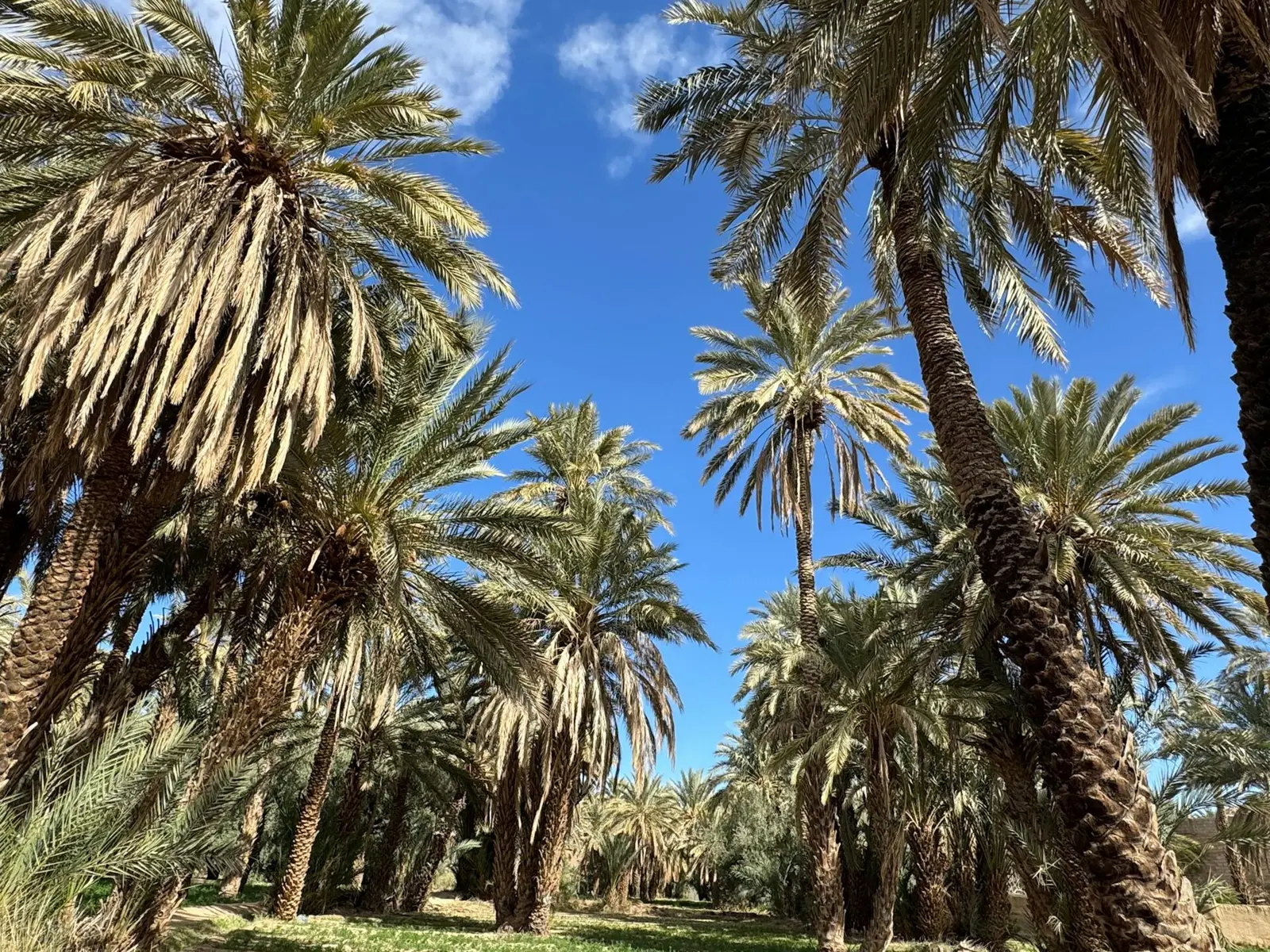
Palms feed oases, support nurseries and tourist towns, and shape whole coastlines. Everywhere, the same insects threaten them.
| Scale | What the palm stands for | Key figures | Main pest |
|---|---|---|---|
| Near East and North Africa | The date palm: food crop and oasis income | 0.95 million ha of date palms, 48 million palms under 20 years old (FAO, 2017) | Red palm weevil |
| Southern Europe | Ornamental palms, nurseries, heritage sites, rare native palms | UNESCO-listed Palmeral of Elche; Phoenix canariensis, endemic to the Canaries; Phoenix theophrasti in Crete and Turkey | Both |
| France | Coastal landscape, towns, gardens, hotels and campsites | 150,000 Canary Island date palms on the Riviera in 2007; the dwarf fan palm, the only native palm, protected since 1982 | Both |



Two pests, one way of killing
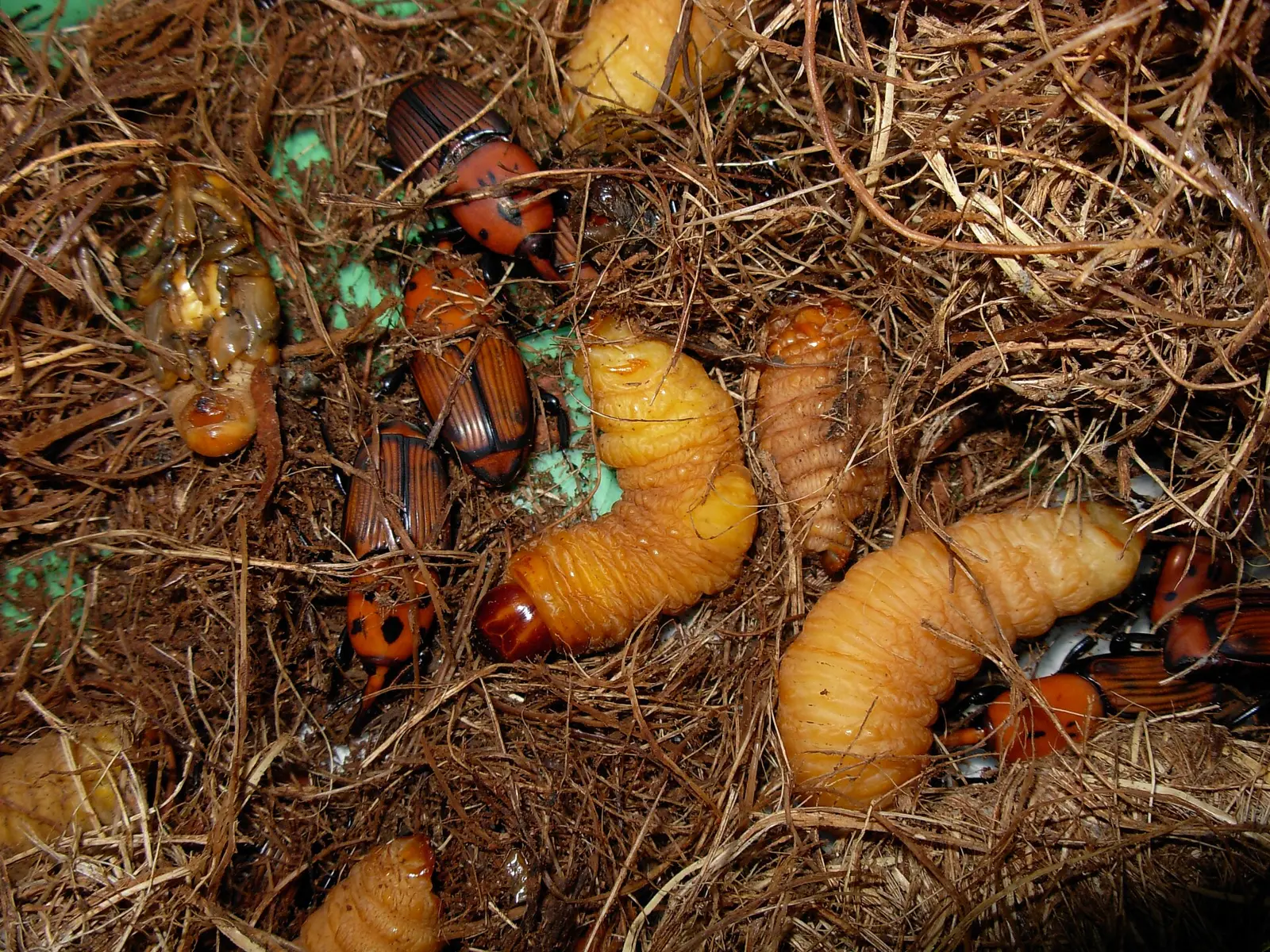
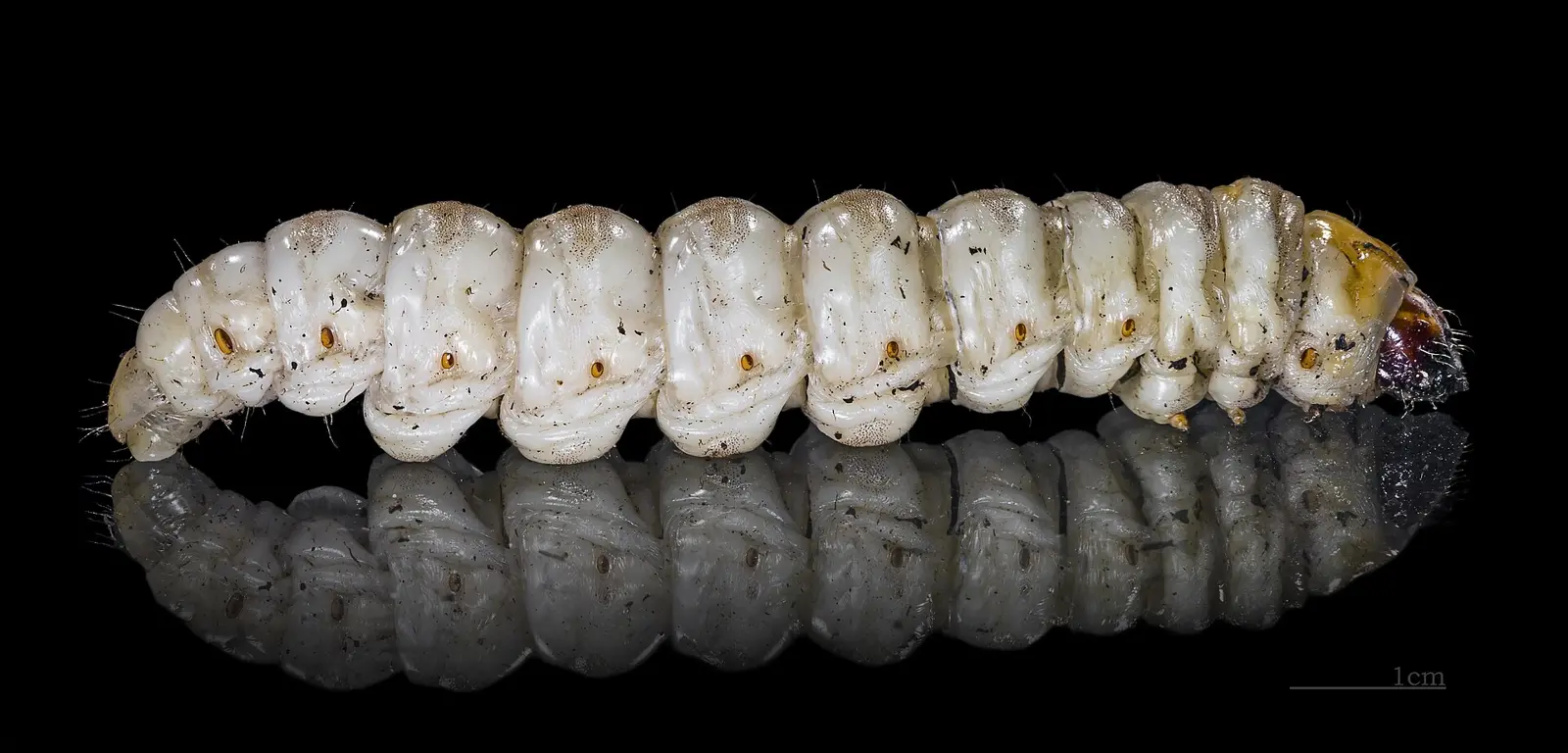
It is not the adult insect that kills but its larva, hidden in the trunk.
| Red palm weevil (Rhynchophorus ferrugineus) | Palm moth (Paysandisia archon) | |
|---|---|---|
| Type | Beetle | Moth |
| Origin | South and South-East Asia | Argentina, Uruguay, Paraguay, southern Brazil |
| Current range | Asia, the Gulf, North Africa, Mediterranean Europe, the Caribbean, South America since 2022 | Southern Europe, now as far as Ukraine |
| What the larvae do | Bore into the heart of the palm; the crown collapses | Bore through trunk and crown for 10.5 to 18.5 months, often without symptoms |
| Palms attacked | Date, coconut, oil palm, above all Phoenix canariensis; about forty species | 38 hosts, including Trachycarpus, Chamaerops, Phoenix, Washingtonia |


A steady advance
In forty years the weevil has moved from the Gulf to South America, and the moth from the Mediterranean to Central Europe.
Oct 2026
EPPO status on 13 Oct 2026: the moth is reported in Switzerland, Hungary, Ukraine, Bulgaria, Croatia, Slovenia, Greece and Cyprus; the weevil in Cyprus and Malta.
22.3%
of the world's countries affected: 43 of 193
Schematic map: a coloured country means the pest is present, not how widespread it is. Dates are first detections or published events (EPPO, FAO 2017, national authorities). Countries without a known date appear only at their first verified mention. Percentage: countries where at least one of the two pests is documented on this map, out of the 193 UN member states. It is a minimum: countries without a verified date are not counted.
Why current methods fail
Every existing solution runs into at least one limit: detection, scope, efficacy, the law or the price.
The larva is hidden
It lives inside the trunk. Drones and thermal cameras only see late stages; a palm can be sold already infested.
The insecticide targets one pest
Emamectin injection protects against the weevil only, is allowed in France only where a prefectoral order applies, and is highly toxic to bees.
Biocontrol is partial
Anses rates the efficacy of the fungus-based product OSTRINIL as "variable and partial". Nematodes need 7 to 10 applications a year.
Governments step back
France ended compulsory control of the moth in 2020 and of the weevil on 1 November 2025; Tuscany had done so in 2018.
Protection costs more than felling
Over ten years, biocontrol for one palm costs €2,000–4,300, felling €470–2,280. Private owners are pulling their palms out (regional plant-health authority, Occitanie, December 2025).
The unmet need: a natural solution, usable without a special order, that reaches the larvae of both pests inside the trunk, at a lower cost than felling the palm.